Unwinding: True Detective Season 2 Episode 8

High Indifference

With more twists and turns than a Bangkok alley, the concluding episode of True Detective Season 2 points out that we are not the masters of our fate… in fact, most things in life are beyond our control.

frank dead

In this blog I’ll discuss my thoughts on the ways episode 8 explores the concept of destiny and what, if any, effect people can have on it.

In many ways the character of Frank Semyon exemplifies the typical individual success story lauded in today’s Western society: he has amassed a fortune through hard work and singular guile. By using his skills he has justly been rewarded with success.  Unfortunately, True Detective sees a gaping flaw in this logic; it reminds us that hard work often doesn’t pay off. This season rams home the point that there are things which people cannot predict or deal with no matter how hard they try. So far, Frank has been somewhat successfully railing against the machinations of those who seek to bring him low. This last episode even teases viewers with the prospect of his victory by allowing Frank to take his revenge on Osip and McCandless.  However, in the end it is simply not enough. No matter how hard Frank tries he cannot control everything in his life. His plan can’t include the wild card factor of the Mexicans and his nature doesn’t allow him to part with the money he sees as his life’s vindication. For his hubris in attempting to control his fate is rewarded with his own demise.

The attempts of the ’92 dirty cops to control their own fate also question the concept of agency. The season revealed the ways in which Holloway, Burris, Caspere, and Dixon seized the opportunity of the ’92 L.A. riots to make money and gain positions in Vinci. These are unscrupulous men who have achieved success through controlling their environment.  However, the fact that they are so confident in their positions eventually leads to their near-total expiry.  During the sequence in the train station Holloway in particular is shown to be completely self-assured and confident of his ability to control the outcome of a sticky situation. His casual conversation and attempts to bribe Velcoro particularly show this outlook. But Holloway, another eminently connected and powerful man, is also brought low by a factor which is simply beyond his control.  Burris and Holloway are not able account for Lenny and his shadowy revenge and thus Holloway is killed.  Thus the series demonstrates the both the far reaching consequences of the actions of these men and that the control they seek to exert is merely an illusion.

But, if this is the case, why did Burris, Tony Chessani, and Geldof survive and apparently continue in their corruption? The fact that some characters suffer the consequences of their actions and some do not exemplifies the subtlety with which True Detective has approached this concept.  There is no powerful force in this show consistently evening the scales; some characters live, some die, some achieve success and some don’t. The sense which the show leaves you with is therefore that really, there is no controlling your fate. You can work within it, understand it, accept it, or work against it but, at the end of the day you simply do not know what will happen.
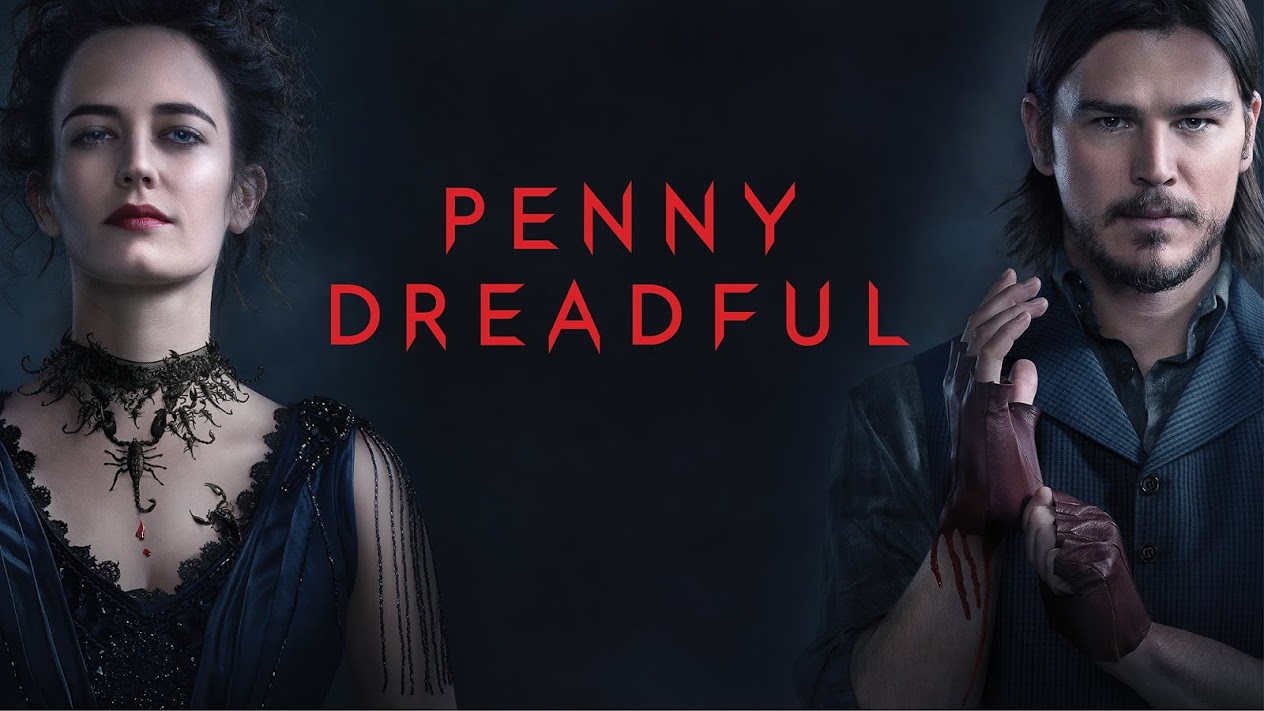
Post Mortem: Penny Dreadful Season 2

Baby Hearts and Broken Hearts

Satisfyingly horrific, bawdy, and introspective in turn, John Logan’s second series of Penny Dreadful will quench your thirst for period pulp fiction while forcing you to question your own inner demons.

penny dreadful

Expanding upon the first season’s loaded character development, the series moves beyond cultivation of fear of the unknown other towards contemplation of the fear of the unknown self.  The new villain, Evelyn Poole aka Madame Kali, stands as a chilling mirror to Vanessa Ives. Much greater focus is given to following the possible motivations and machinations of Evelyn than was allowed to the Vampire villain of the first season; thus a different and more immediately personal tone of fear is established for the Nightcomer witches.  While their repeated execution of young families and use of baby hearts in mechanical china dolls serves to create a grotesque fear; I feel that their steady alignment with and eventual conquest by Vanessa constitutes the greater underlying terror.

Their similarities to Miss Ives only increase as the tandem characters are developed.  The third episode provides a potent view on male fear of female power and the consequences of agency beyond patriarchal control; providing but one example of the way the second season continues the show’s confident exploration of gender on both sides. However Vanessa’s relationship and training by the unflinching Cut-Wife highlights the fact that she is but a step away from becoming like the very villains who pursue her.  The fact that later in the season she does transgress this boundary serves to cement the parallel between Evelyn and Miss Ives.

But the theme of battling the unknown self does not end with Vanessa; Ethan, Victor, Malcolm, and Sembene all face similar situations during the season.  Each of these characters deals with problems caused by their rampant masculinity; Malcolm confronts and is exploited by a lifelong ignorance of his emotional organs, Ethan discovers the dire consequences of the unbridled aggression and fervour for violence he holds trapped within himself, and Sembene reveals his past in human trafficking and acknowledges the deep shame he lives with over his actions.

However, it is the character of Victor Frankenstein who occupies the position most unsettling of all the male characters.  His conquest of creation continues where the last season left off with the reanimation of the corpse of Brona Croft. Doing this in order to appease his first creation is instantly problematic; but the fact that he immediately proceeds to objectify and fall into an infatuation with what is essentially his daughter strikes a far more sinister note. While shows like Game of Thrones repeat the mantra of ‘We can’t help who we love’, even the most open minded viewer of Penny Dreadful (and I’d hope to count myself amongst those) can’t help but feel that Frankenstein severely betrays his responsibility to the newly created Lily by acquiescing to their romantic relationship.  This, combined with the evolution of Brona/Lily into a psychopath out for world domination, plunges both Victor and viewer into a pit of despair at just how badly this scientist has repeatedly mishandled his actions.

The season ends with the tightly-knit family which was bound together by the events the first series scattered across the globe. Questions abound as to the multi-season arc concerning Lucifer, Vanessa, and Ethan; Sembene lies dead almost as soon as he began to become beloved, the creepy dolls of the Nightcomers lie shattered on the floor, and Hecate Poole smugly marches away from her burning home to yet more evil deeds (a special shoutout to this actress, I applaud the way someone so attractive can make themselves so subtly yet utterly repulsive). But none of this pulp or grotesquery would be interesting in the slightest without morally questionable and compelling characters; and Penny Dreadful has these in spades.