Unwinding: True Detective Season 2 Episode 8

High Indifference

With more twists and turns than a Bangkok alley, the concluding episode of True Detective Season 2 points out that we are not the masters of our fate… in fact, most things in life are beyond our control.
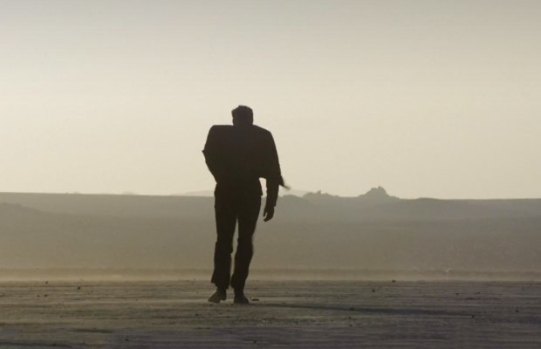
frank dead

In this blog I’ll discuss my thoughts on the ways episode 8 explores the concept of destiny and what, if any, effect people can have on it.

In many ways the character of Frank Semyon exemplifies the typical individual success story lauded in today’s Western society: he has amassed a fortune through hard work and singular guile. By using his skills he has justly been rewarded with success.  Unfortunately, True Detective sees a gaping flaw in this logic; it reminds us that hard work often doesn’t pay off. This season rams home the point that there are things which people cannot predict or deal with no matter how hard they try. So far, Frank has been somewhat successfully railing against the machinations of those who seek to bring him low. This last episode even teases viewers with the prospect of his victory by allowing Frank to take his revenge on Osip and McCandless.  However, in the end it is simply not enough. No matter how hard Frank tries he cannot control everything in his life. His plan can’t include the wild card factor of the Mexicans and his nature doesn’t allow him to part with the money he sees as his life’s vindication. For his hubris in attempting to control his fate is rewarded with his own demise.

The attempts of the ’92 dirty cops to control their own fate also question the concept of agency. The season revealed the ways in which Holloway, Burris, Caspere, and Dixon seized the opportunity of the ’92 L.A. riots to make money and gain positions in Vinci. These are unscrupulous men who have achieved success through controlling their environment.  However, the fact that they are so confident in their positions eventually leads to their near-total expiry.  During the sequence in the train station Holloway in particular is shown to be completely self-assured and confident of his ability to control the outcome of a sticky situation. His casual conversation and attempts to bribe Velcoro particularly show this outlook. But Holloway, another eminently connected and powerful man, is also brought low by a factor which is simply beyond his control.  Burris and Holloway are not able account for Lenny and his shadowy revenge and thus Holloway is killed.  Thus the series demonstrates the both the far reaching consequences of the actions of these men and that the control they seek to exert is merely an illusion.

But, if this is the case, why did Burris, Tony Chessani, and Geldof survive and apparently continue in their corruption? The fact that some characters suffer the consequences of their actions and some do not exemplifies the subtlety with which True Detective has approached this concept.  There is no powerful force in this show consistently evening the scales; some characters live, some die, some achieve success and some don’t. The sense which the show leaves you with is therefore that really, there is no controlling your fate. You can work within it, understand it, accept it, or work against it but, at the end of the day you simply do not know what will happen.
Unwinding: True Detective Season 2 Episode 7

So Never Mind

Brutally succinct and relentlessly bleak, episode seven of True Detective season two ‘Black Maps and Motel Rooms’ will leave you with a lump in your throat and tell you to fucking suck it up.

Here we have it: the beginning of the end, the dark before the dawn, the nadir in the journey of the heroes we follow. This episode practically bombards viewers with revelations and consequences in equal measure. In this blog I’ll consider three moments which stood out to me, Frank ripping up the poker table, Vera and Bezzerides’ conversation, and the final scene.

the-western-book-of-the-dead-frank-speaks-with-ray1

  • Frank destroys stuff and looks cool doing it

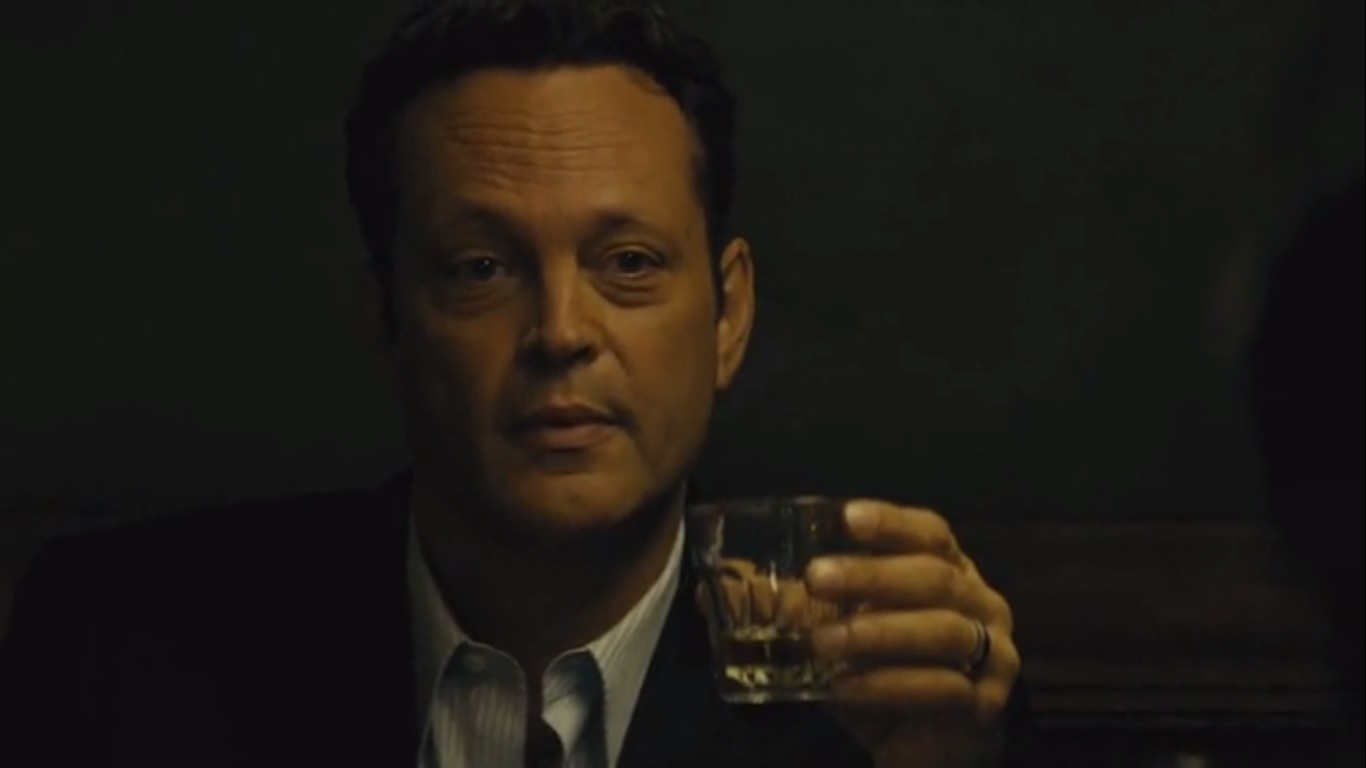
The load of story development this week hung heavy on Frank Semyon; as a result, I was particularly impressed with how Vaughn executed several moments which could easily have fallen flat. His portrayal has steadily grown on me as the season has gone on (starting with that excellent scene where he pulled out the gold teeth) and I feel that this episode capitalises on that carefully laid groundwork. This is exemplified in the scene when Frank rips up the table after speaking with Velcoro. This fleeting moment really captures and amplifies Frank’s arc; he finally understands the machinations which have been working against him for no small amount of time and, in a moment of pure rage, allows himself to let loose before once more becoming the composed man capable of reaching out and attempting to control his own fate. Blake’s death, the destruction of the clubs, and the cool discussion with Osip are all framed by this moment.

  • Vera says she wants to be a hooker

Vera’s statement that she was never missing and that she didn’t need or want to be saved clouds the audience’s perception of Bezzerides’ motives. This, combined with the threat at the end, indicates Bezzerides’ priorities really lie with solving the case rather than helping the needy.  Questioning the judgement of the heretofore unshakeable female detective prompts us to consider the motivations and judgements which we make on a daily basis. What is abhorrent for one might be common for another; that’s not to say either perspective is right or wrong, merely that it might sometimes be necessary to consider viewpoints different from your own.

  • Woodrugh gets what he did and didn’t deserve

At the end of the episode, we witnessed the tragic death of Paul Woodrugh at the hands of Lieutenant Burris; after last week many had Burris as their chief suspect for the murder of Paul Caspere. Turns out they were dead right. Burris is the man who killed Caspere, the man who we’ve been looking for, and the man on the exit. It was clear from the beginning of the season that Woodrugh had mixed feelings about being alive; while riding his motorbike in the dark without the lights on didn’t tip the scale, walking into an ambush concocted by successful rogue-cops and mercenaries sure did. There was really only one conclusion to the story of a character as conflicted as Woodrugh; True Detective just brought us that conclusion in acutely ruthless fashion. The shot of his face as he crawls away, cursing and trying to live as Burris approaches from behind and shoots him once more, is a stark indicator that like all tragic characters he has inevitably died too soon. Nobody doubts Woodrugh really was trying to be a ‘good man.’ He just couldn’t fit into anyone’s narrow definition of that, including his own.

Personally, I can’t wait to see how True Detective wraps up the plotlines of the remaining characters next week.

Unwinding: True Detective Season 2 Episode 6

Swarm of Flies

Perverted old men, paedophiles, and rapists; episode six ‘Church in Ruins’ throws punches until you can barely stand to look in the mirror. This episode continues to ramp up the action and pull various plotlines together; we finally find out where the missing girl Vera is, some of the background to Frank’s betrayal is revealed, and our understanding of Bezzerides’ character goes through a diametric shift.

frank_ray_kitchen_faceoff_-_true_detective.0

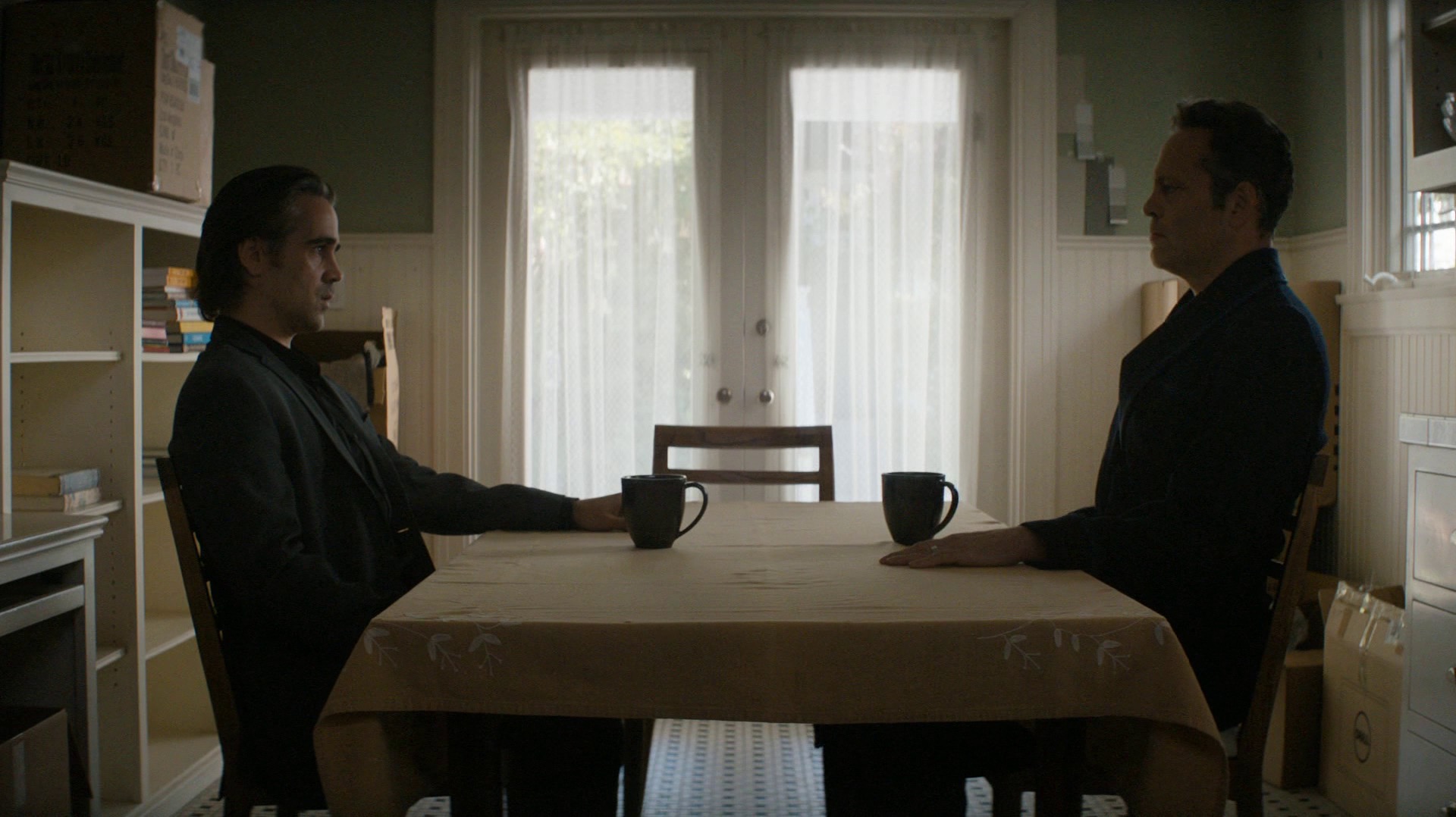
There have been several moments in this season which have really stuck with me; the opening scene of this episode is one of them. The conversation between Velcoro and Semyon succinctly frames a lot of the themes which the season has been exploring. Farrell and Vaughn do a great job of reiterating them here through both their faces and their dialogue delivery. The conversation itself allows each character to articulate some of their points of view and to once again bring these ideas before the audience. For example, Frank talks of his sense of justice; so far there have been several moments where Frank’s personal code has been challenged or not upheld by other characters. Velcoro also seems to hold a series of unshakeable values which perhaps is a reason why the men get on so well. However, the problem with systems like these is that they don’t function when other people don’t follow your rules of engagement e.g. you get stiffed on custody or you get ripped off.

This season asks questions of the place of honour in our society; are these two character working under outmoded principles? People like to think we live in exceptional times (consider Eliot Bezzerides’ pseudo-wise remarks in the first episode about ‘the final age of man’) but I’m not altogether convinced. War and inequality have always existed along with the people who make opportunities from them; these issues merely seem more pronounced in our time because we have direct experience of them. But, that’s not to say they should be ignored, I only want to articulate that the endeavours of those with ‘honour’ have been successful until now in maintaining our hint of civilisation and likely will continue to be if they remain true to their core values. Semyon and Velcoro might seem like odd exemplars of this conundrum; however I feel that to be one of this season’s masterstrokes. Questions of civilisation are markedly more focused when viewed through the lens of a coked-out cop and a mob boss instead of a caped crusader. Nothing is black and white; neither the answer to this question nor the character of these men.

Further into the conversation, Semyon tells Velcoro that he was always waiting to become who he is now and that his crimes only brought him to his true self. This line brings into focus the extent to which each character has been wrestling with their conceptions of identity: Woodrugh cannot align his homosexuality with his Clint Eastwood-esque personality and formidable martial skill; Bezzerides is barely beginning to admit to herself where her trust issues might arise from; Semyon is so keen on maintaining his wealth he can barely stop to think about why he even needs it; and Velcoro is so wrapped up in his paternal fantasy that he’ll give up his right to see his son in order to avoid testing it.  But maybe the point is that the identities of all these characters are subject to change and various; presented in this way, the show points to the source of their problems not being who they are, but their lack of acceptance.

not-jesus_-_true_detective.0

Speaking of identity, ‘Church in Ruins’ massively shifts the audience’s perception of Bezzerides. This begins halfway through the episode with McAdams showing off her skill with a knife. Yet again, Bezzerides is presented as maniacal and driven; sweating as she practises a killing move over and over again and barely talking with her sister. But this time the scepticism this engenders in the audience is brought full circle. The answer to why Bezzerides hates Panticapaem so much is truly shocking; the abuse she suffered is slowly elucidated in parallel with the voraciously efficient tone of Blake and Toni Chessani’s high end orgy. The brief shots of the past, punctuated by the final one of the chillingly young arm, serve to realign the audience’s perception of McAdams’ character. Now her endless training and acute understanding of physical power differentials doesn’t seem remotely irrational. I really appreciated the way that McAdams didn’t overdo the acting during part of the episode; her portrayal of the drug induced memories was powerful in its restraint.

On a lighter note, I hope everyone saw the Vinci Police Chief talking to Osip in the background of one of the shots of Tony Chessani; this lends particular credence for me to the theory many share that Lieutenant Burris could be our mystery birdman murderer. The description of the dead girl Irina certainly matches his profile: she calls him big (read tall for someone who doesn’t speak English as a first language), and comments on the fact that he was some sort of Heffe (boss). Perhaps Blake and Tony used the connections they made at their parties to Vinci PD and Osip in order to rip off Frank and double their investment in the rail line? Regardless, I’m keen to see how the next episode continues to pull the threads of season two’s story together.

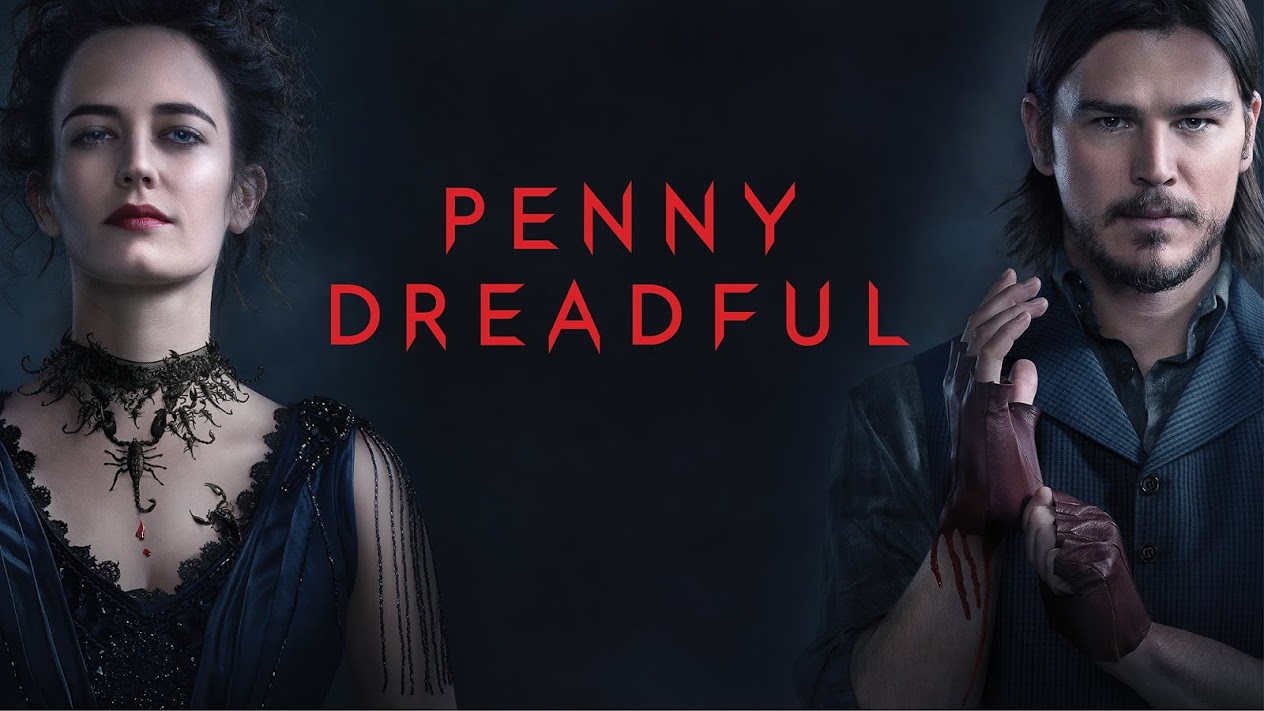
Post Mortem: Penny Dreadful Season 2

Baby Hearts and Broken Hearts

Satisfyingly horrific, bawdy, and introspective in turn, John Logan’s second series of Penny Dreadful will quench your thirst for period pulp fiction while forcing you to question your own inner demons.

penny dreadful

Expanding upon the first season’s loaded character development, the series moves beyond cultivation of fear of the unknown other towards contemplation of the fear of the unknown self.  The new villain, Evelyn Poole aka Madame Kali, stands as a chilling mirror to Vanessa Ives. Much greater focus is given to following the possible motivations and machinations of Evelyn than was allowed to the Vampire villain of the first season; thus a different and more immediately personal tone of fear is established for the Nightcomer witches.  While their repeated execution of young families and use of baby hearts in mechanical china dolls serves to create a grotesque fear; I feel that their steady alignment with and eventual conquest by Vanessa constitutes the greater underlying terror.

Their similarities to Miss Ives only increase as the tandem characters are developed.  The third episode provides a potent view on male fear of female power and the consequences of agency beyond patriarchal control; providing but one example of the way the second season continues the show’s confident exploration of gender on both sides. However Vanessa’s relationship and training by the unflinching Cut-Wife highlights the fact that she is but a step away from becoming like the very villains who pursue her.  The fact that later in the season she does transgress this boundary serves to cement the parallel between Evelyn and Miss Ives.

But the theme of battling the unknown self does not end with Vanessa; Ethan, Victor, Malcolm, and Sembene all face similar situations during the season.  Each of these characters deals with problems caused by their rampant masculinity; Malcolm confronts and is exploited by a lifelong ignorance of his emotional organs, Ethan discovers the dire consequences of the unbridled aggression and fervour for violence he holds trapped within himself, and Sembene reveals his past in human trafficking and acknowledges the deep shame he lives with over his actions.

However, it is the character of Victor Frankenstein who occupies the position most unsettling of all the male characters.  His conquest of creation continues where the last season left off with the reanimation of the corpse of Brona Croft. Doing this in order to appease his first creation is instantly problematic; but the fact that he immediately proceeds to objectify and fall into an infatuation with what is essentially his daughter strikes a far more sinister note. While shows like Game of Thrones repeat the mantra of ‘We can’t help who we love’, even the most open minded viewer of Penny Dreadful (and I’d hope to count myself amongst those) can’t help but feel that Frankenstein severely betrays his responsibility to the newly created Lily by acquiescing to their romantic relationship.  This, combined with the evolution of Brona/Lily into a psychopath out for world domination, plunges both Victor and viewer into a pit of despair at just how badly this scientist has repeatedly mishandled his actions.

The season ends with the tightly-knit family which was bound together by the events the first series scattered across the globe. Questions abound as to the multi-season arc concerning Lucifer, Vanessa, and Ethan; Sembene lies dead almost as soon as he began to become beloved, the creepy dolls of the Nightcomers lie shattered on the floor, and Hecate Poole smugly marches away from her burning home to yet more evil deeds (a special shoutout to this actress, I applaud the way someone so attractive can make themselves so subtly yet utterly repulsive). But none of this pulp or grotesquery would be interesting in the slightest without morally questionable and compelling characters; and Penny Dreadful has these in spades.